Which towns to visit on the Costa Brava?

Discover the most charming villages of the Costa Brava and explore seaside towns, medieval villages and corners full of history and culture.

Which towns to visit on the Costa Brava?

The most charming villages on the Costa Brava

Near Roses you'll find some of the most charming towns on the Costa Brava. Medieval towns, seaside villages, and destinations steeped in history, culture, and nature invite you to discover the essence of the Empordà region. From Cadaqués to Pals and Begur, every corner offers a unique experience during your stay.

Roses

Roses

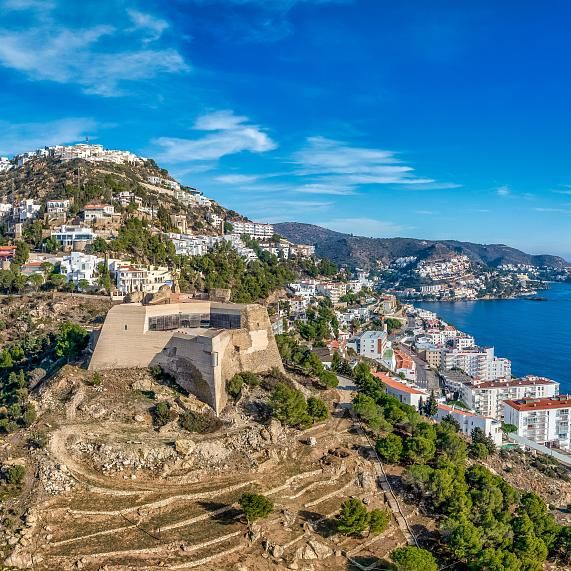
Roses is a town with a rich historical, natural, and cultural heritage, located in the Alt Empordà region, at the entrance to the Cap de Creus Natural Park. Its origins date back to the Greek colony of Rhode, founded in the 4th century BC, and its architectural heritage bears witness to a history shaped by civilizations such as the Roman, Visigothic, and medieval.

One of Roses' main attractions is its Citadel, a 139,000 m² walled enclosure where remains from different eras can be found, from the ancient Greek colony to 16th-century military buildings. This archaeological site, declared a Cultural Asset of National Interest, also houses the Citadel History Museum, which offers a comprehensive view of the city's past.

Beyond its historical legacy, Roses is known for its beaches and coves, many of them located within the Cap de Creus Natural Park. Spots like Cala Montjoi, Cala Jóncols, and Platja de l'Almadrava are ideal for enjoying the Mediterranean in a privileged natural setting.
Cadaqués

Cadaqués

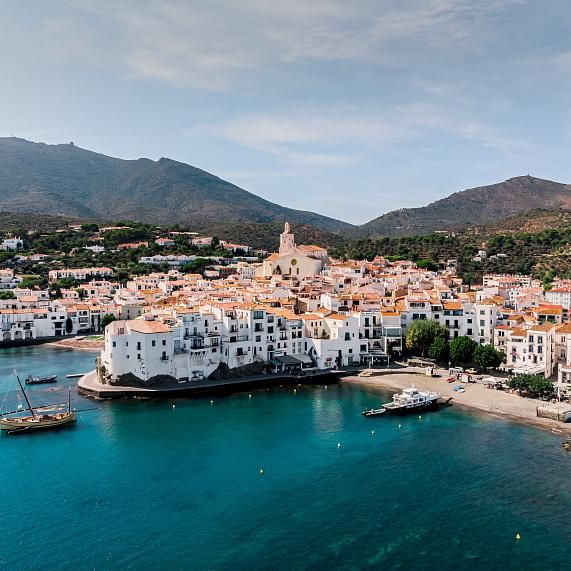
Cadaqués is one of the most picturesque and emblematic towns on the Costa Brava, an enclave of whitewashed houses, cobbled streets, and a bay that has captivated artists and travelers for centuries. Located in the heart of the Cap de Creus Natural Park, this former fishing village has preserved its Mediterranean essence and bohemian atmosphere, making it an essential destination for those seeking authenticity and beauty.

One of Cadaqués's greatest attractions is its connection to art, especially to Salvador Dalí, who spent much of his life at the nearby Portlligat House-Museum. This residence, now a museum, allows visitors to delve into the world of the brilliant painter and discover the influence the Cap de Creus landscape had on his work. Furthermore, the town boasts several art galleries and a vibrant cultural scene that keeps its artistic legacy alive.

Exploring Cadaqués means getting lost in its narrow streets, admiring the Church of Santa María with its impressive Baroque altarpiece, and enjoying spectacular sea views. Its small coves and beaches, such as Sa Conca or Cala Nans, are perfect for relaxing in a unique natural setting. The cuisine is also a highlight, with specialties based on fresh fish and seafood that can be savored in its inviting seaside restaurants.

Calella de Palafrugell

Calella de Palafrugell

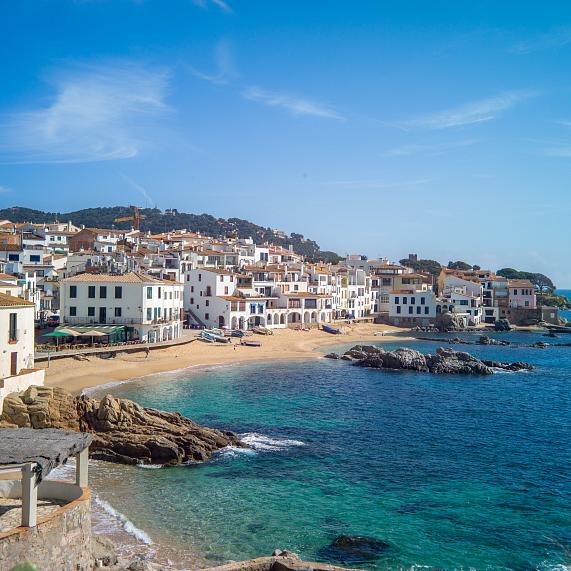
Calella de Palafrugell is one of the most charming villages on the Costa Brava, a former fishing village that has preserved its maritime essence with its whitewashed houses, narrow streets, and small coves with crystal-clear waters. Located in the municipality of Palafrugell, this picturesque village is famous for its idyllic scenery, tranquil atmosphere, and deep connection to Mediterranean culture.

One of the most emblematic spots in Calella de Palafrugell is the Camino de Ronda, a coastal path that offers spectacular views of the sea, cliffs, and hidden coves. Following this route leads to places like Llafranc or the iconic Cala El Golfet, one of the most beautiful beaches in the area, located within the natural surroundings of the Cap Roig Botanical Garden. This garden, in addition to housing a great diversity of plant species, is the venue for the prestigious Cap Roig Festival, a leading summer music event.

The town is known for its traditional Habanera singing, which is held every year on Port Bo beach and brings together hundreds of people to enjoy the music and maritime culture.

Begur

Begur

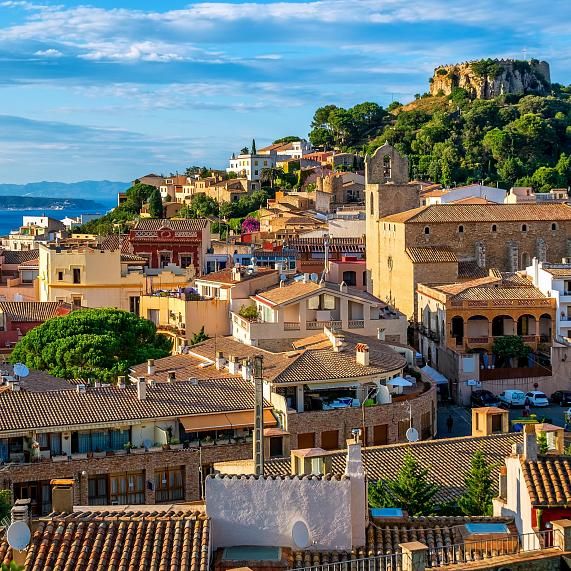
Begur is one of the most emblematic towns on the Costa Brava, a destination that combines history, spectacular landscapes, and an unmistakable Mediterranean atmosphere. Located in the heart of the Baix Empordà region, this charming town stretches between its old quarter, dominated by its imposing medieval castle, and its coastline, dotted with idyllic coves.

Begur Castle, perched atop the hill, is one of the town's main symbols and offers breathtaking panoramic views of the coast and the Empordà region. Strolling through the cobbled streets of the historic center reveals the legacy of the "Indianos" those Begur natives who emigrated to the Americas in the 19th century and returned wealthy, leaving behind an architectural heritage evident in their elegant colonial houses. Furthermore, the town hosts the annual Fira d'Indians, a celebration that pays homage to its colonial past with music, markets, and activities that transport visitors to another era.

Beyond its old town, Begur is famous for its coastline, boasting some of the most beautiful coves on the Costa Brava. Aiguablava, with its fine sand and turquoise waters, is one of the most popular, while Sa Tuna and Sa Riera retain the charm of old fishing villages. All are perfect for swimming, snorkeling, or simply enjoying the tranquility of the sea.

Pals

Pals

Pals is one of the most captivating medieval villages on the Costa Brava, a place where its medieval legacy lives on in every stone. Located in the heart of the Baix Empordà, this historic enclave sits atop a hill, offering privileged views over the rice fields and the characteristic Empordà landscape.

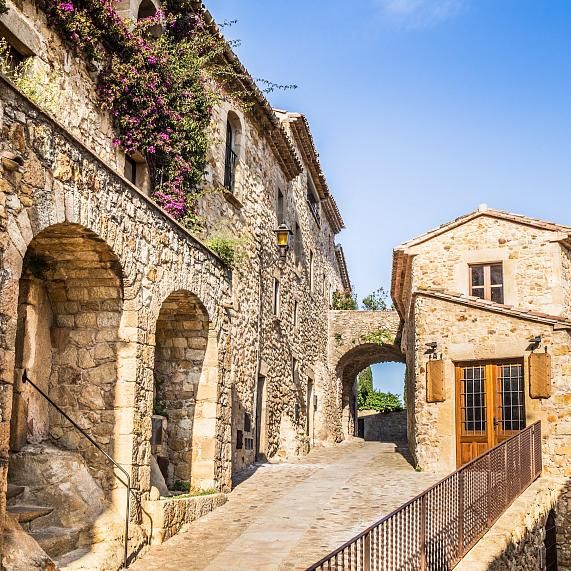
The old town of Pals is a true journey back in time. Its cobbled streets, well-preserved walls, and stone houses with medieval archways create a unique atmosphere. At the top of the town stands the Torre de les Hores (Clock Tower), an 11th-century Romanesque structure that is the emblem of Pals and from which you can admire an exceptional panoramic view of the region.

One of Pals' most distinctive features is its Gothic ensemble, comprised of buildings such as the Church of Sant Pere, which blends Romanesque, Gothic, and Baroque elements, and the old Pals Castle, of which only a few ruins remain today. At every turn, the village surprises visitors with charming corners, from small flower-filled squares to viewpoints overlooking the Empordà landscape.

Besides its rich architecture, Pals is known for its connection to rice. Extensive rice paddies surround the town, and their cultivation has a centuries-old tradition. In fact, Pals rice is a high-quality product that features prominently in many of the area's typical dishes, such as arròs a la cassola (casserole) and arròs negre (black rice).

Peratallada

Peratallada

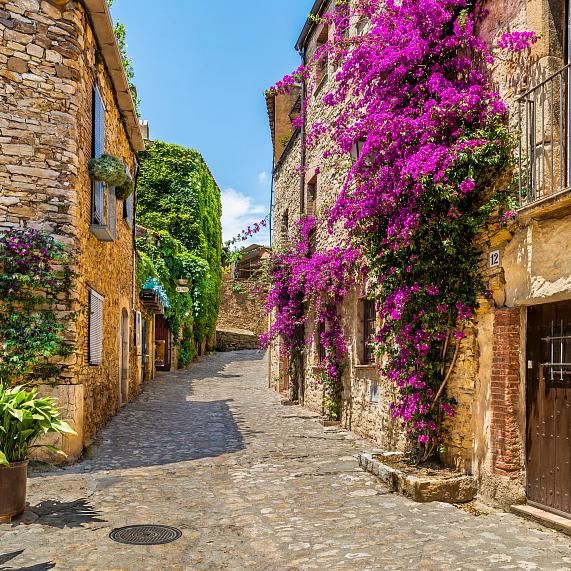
Peratallada is one of the best-preserved medieval villages on the Costa Brava, thanks to its network of cobbled streets, imposing walls, and stone houses adorned with vines and flowers.

The name Peratallada comes from the expression "pedra tallada" (cut stone), referring to the deep ditches carved into the rock upon which the village sits and which formed part of its defensive system. These ancient structures, along with its fortified castle, towers, and walled enclosure, make it one of the most fascinating medieval towns in Catalonia.

Peratallada Castle, documented since the 10th century, is one of the town's main attractions. Its imposing keep and inner courtyard retain the stately character it possessed during the Middle Ages. Around it, the labyrinthine alleyways lead to corners steeped in history, such as Plaça de les Voltes, with its medieval arches, and the Romanesque church of Sant Esteve, located outside the walled enclosure.

Throughout the year, Peratallada maintains its medieval essence with events such as the Medieval Fair, where the streets are filled with merchants, troubadours and shows that recreate life in the Middle Ages.

Figueres

Figueres

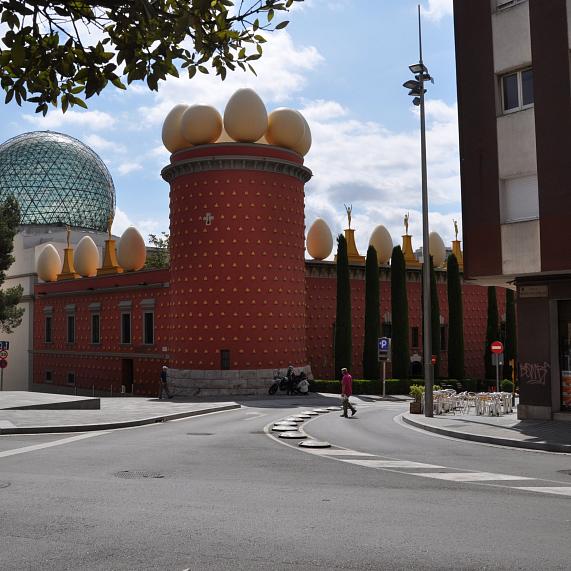
Figueres, the capital of the Alt Empordà region, is a city steeped in history, culture, and art, known worldwide as the birthplace of Salvador Dalí. His legacy is palpable everywhere, especially in the Dalí Theatre-Museum, one of Spain's most visited museums and a must-see for lovers of surrealist art.

But Figueres is much more than just the painter. The city boasts a significant historical heritage, including Sant Ferran Castle, one of the largest military fortresses in Europe, built in the 18th century, offering breathtaking views of the Empordà plain. Also noteworthy are the Romanesque church of Sant Pere and the Rambla, the main promenade lined with Modernist and Neoclassical buildings that reflect the city's rich architectural history.

Every year, Figueres hosts events and festivals that energize the city, such as the Acústica Festival, which brings together prominent national artists, and the Empordà Wine Fair, where you can taste the best wines of the region.

Tossa de Mar

Tossa de Mar

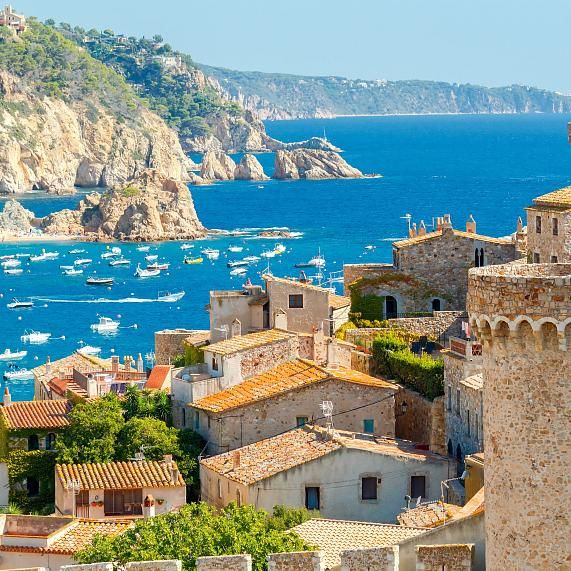
Tossa de Mar is one of the most emblematic destinations on the Costa Brava, a town located between cliffs and surrounded by lush Mediterranean vegetation that perfectly combines medieval charm with the beauty of its coves and beaches with crystal-clear waters.

The symbol of Tossa de Mar is its Vila Vella, a 13th-century walled enclosure perched on a promontory overlooking the sea. It is the only surviving medieval coastal fortification in Catalonia, with its imposing towers and cobbled streets that transport visitors to another era. Within the enclosure are the remains of the old church of Sant Vicenç.

Beyond its medieval heritage, Tossa de Mar is also a natural paradise. Its beaches and coves, such as Platja Gran, Cala Pola, and Cala Giverola, are perfect for sunbathing, snorkeling, or exploring the coast by kayak. It also boasts hiking trails that allow you to discover spectacular landscapes, such as the Camí de Ronda, which winds along the cliffs and offers panoramic views of the Mediterranean.

The culinary offerings of Tossa de Mar are another of its attractions, with a strong maritime tradition. The most representative dish is cim i tomba, a fish stew with potatoes and aioli that fishermen used to prepare on board their boats.

You may also be interested

Hotel Marina 3* in Roses, Costa Brava